Cert Lane Building Certifiers

ONE: The Challenge

Cert Lane's website had evolved over time and lacked clear pathways for users to understand services, industry relevance and certification processes. The objective was to simplify complex information, improve navigation and create a more customer-focused experience.

Branding

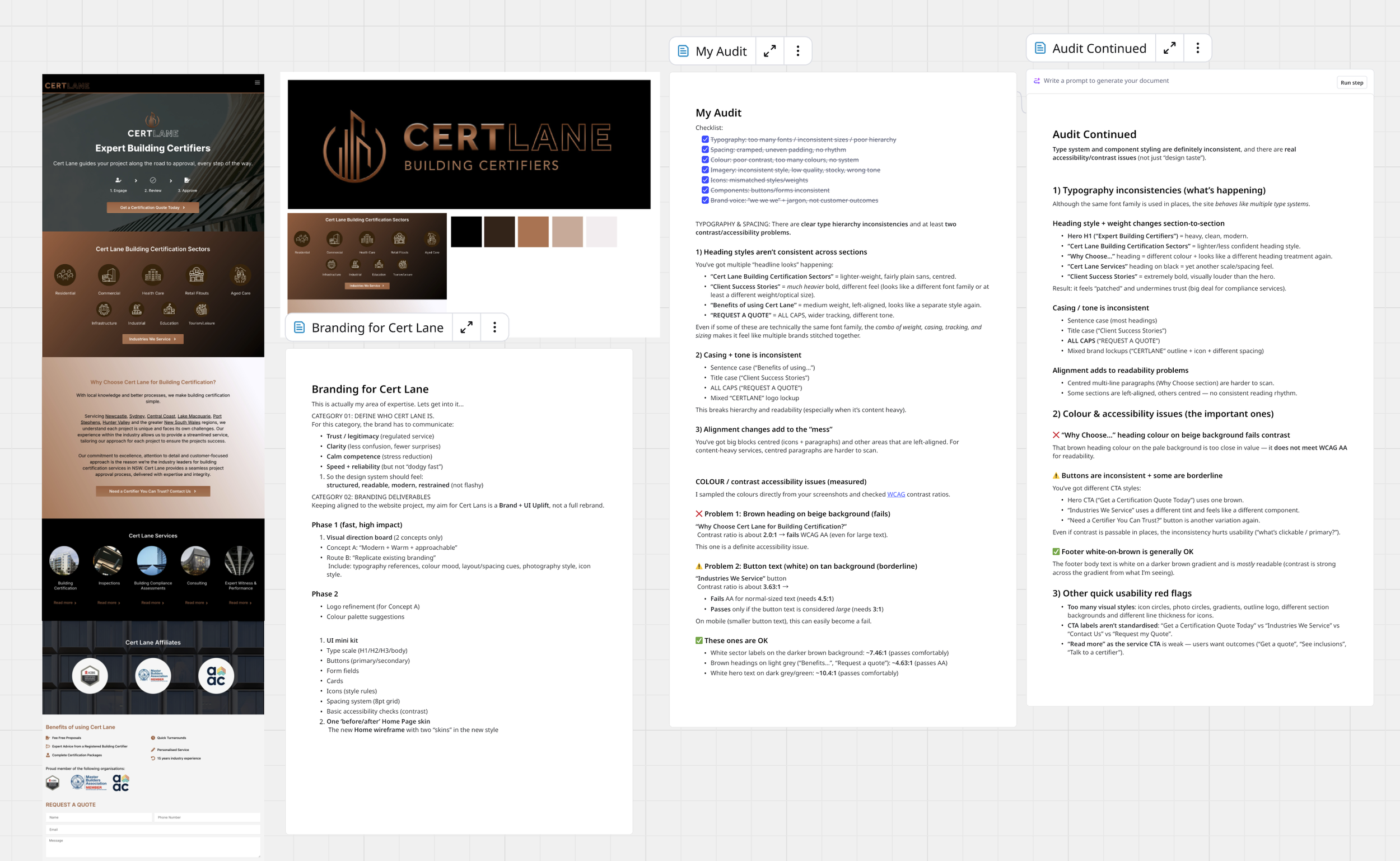
Cert Lane’s branding contained major inconsistencies in type styles and hierarchy, iconography inconsistencies and colour issues with the contrast ratio (which was 2.0:1fails WCAG AA)

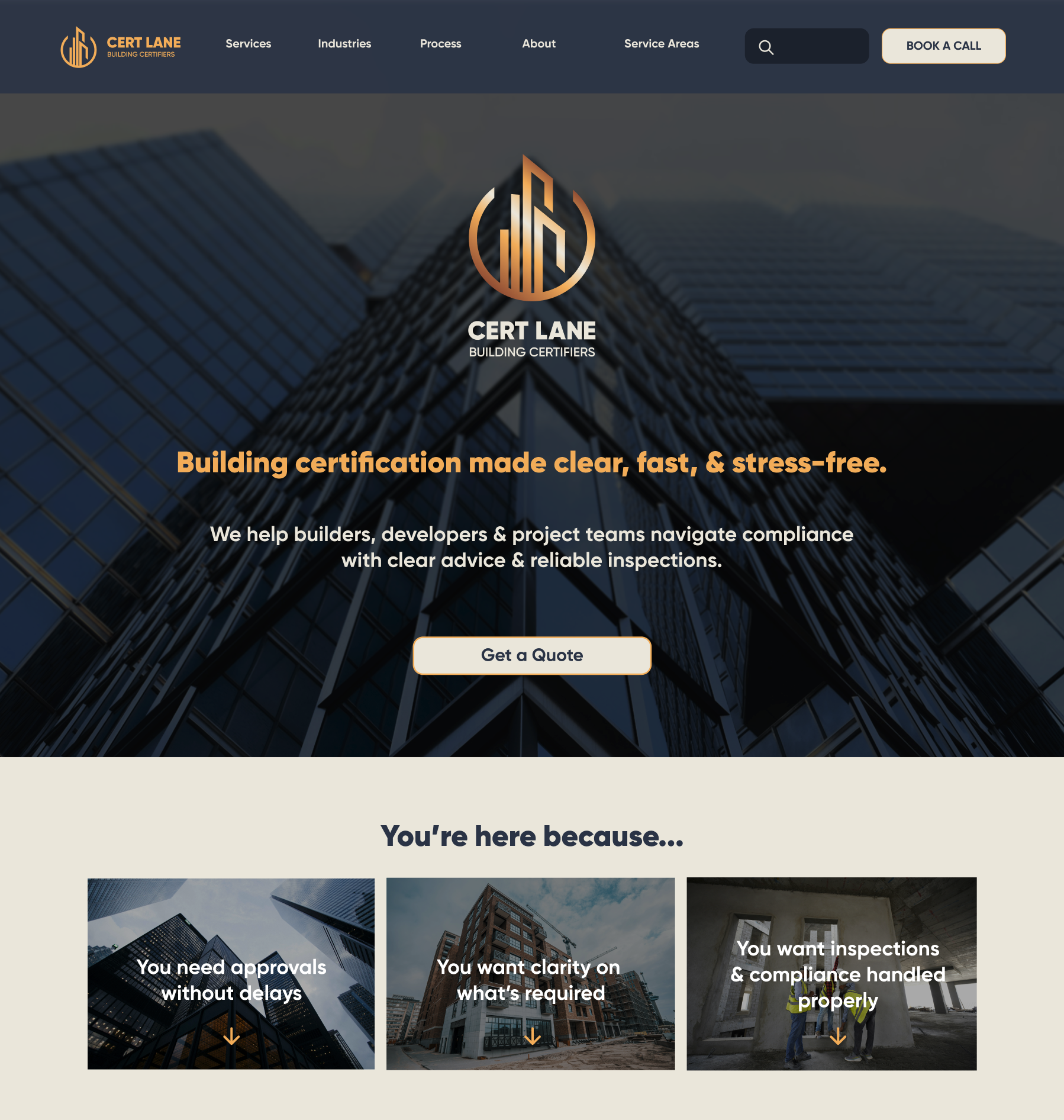
Screenshot of Cert Lane website homepage showing high-rise buildings and construction sites with a focus on building certification services.

TWO: Discovery & Audit

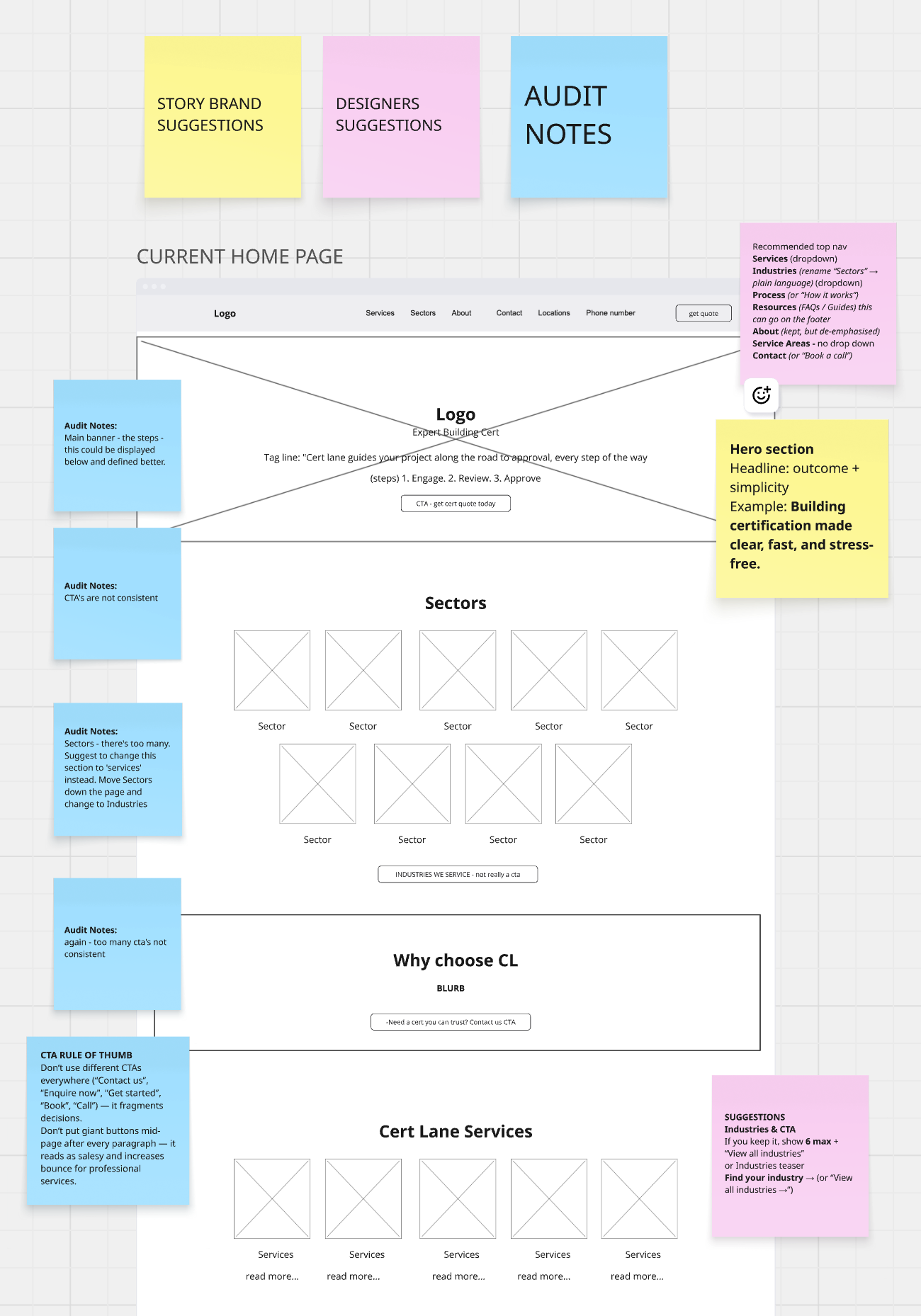
Wireframe or mockup of a website layout featuring sticky notes with sections labeled as story brand suggestions, designer suggestions, audit notes, sector suggestions, industry services, and CTA rule of thumb. The page header reads 'CURRENT HOME PAGE' and includes a navigation menu with links like Logo, Services, Sectors, About, Contact, Locations, and Phone number.
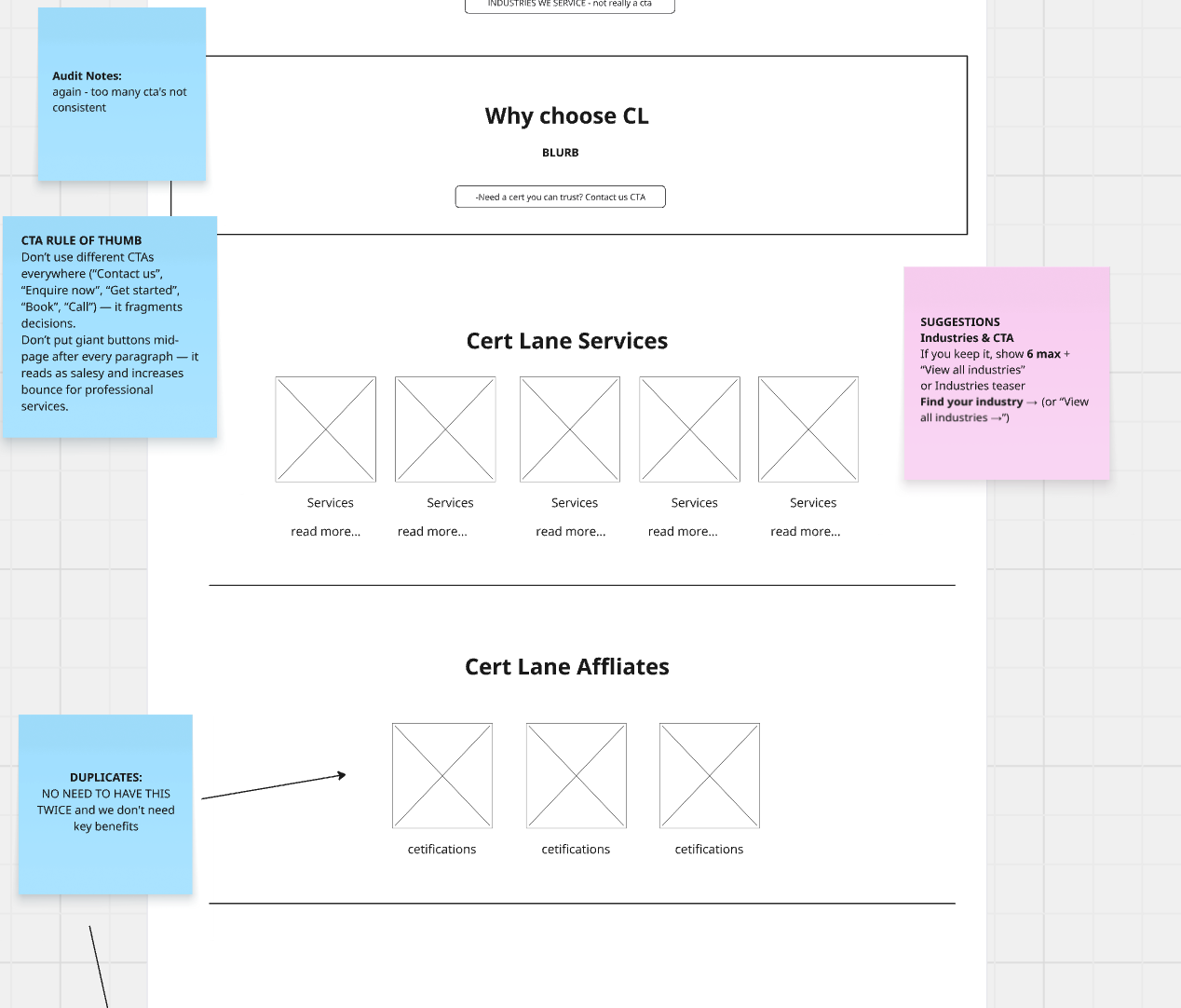
A digital diagram with sticky notes and placeholders for content. The top section has a title "Why choose CL" with a subtitle "BLURB." Below is a section titled "Cert Lane Services" featuring five placeholders for services with 'read more...' links. Further down, there's a section labeled "Cert Lane Affiliates" with three placeholders labeled "certifications." Three sticky notes are attached: a light blue one on the left with audit notes, a blue one below with notes about duplicates, and a pink one on the right with suggestions for industries and CTA options.
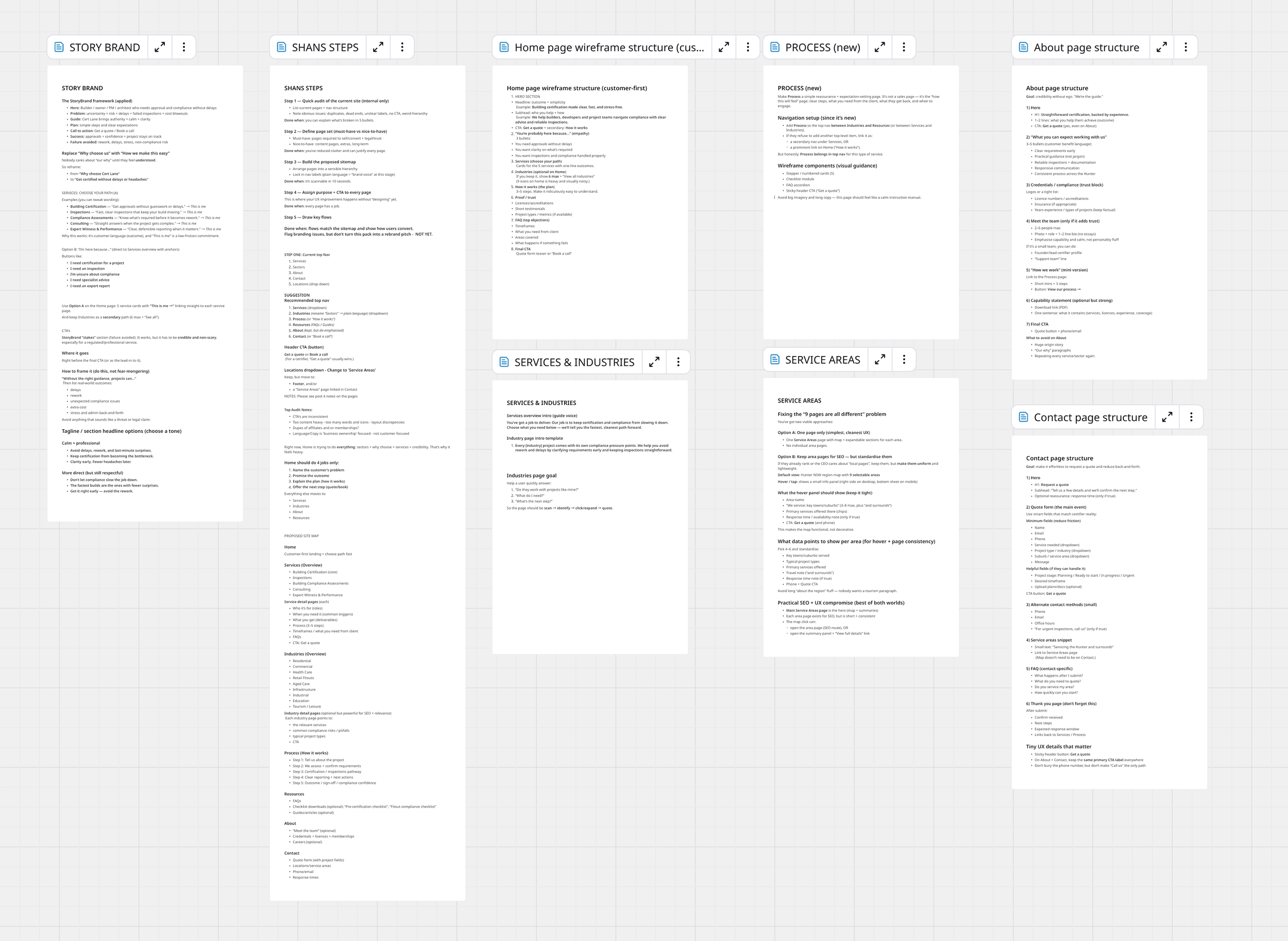
A collection of detailed digital documents and wireframes related to website and service page planning and structure.
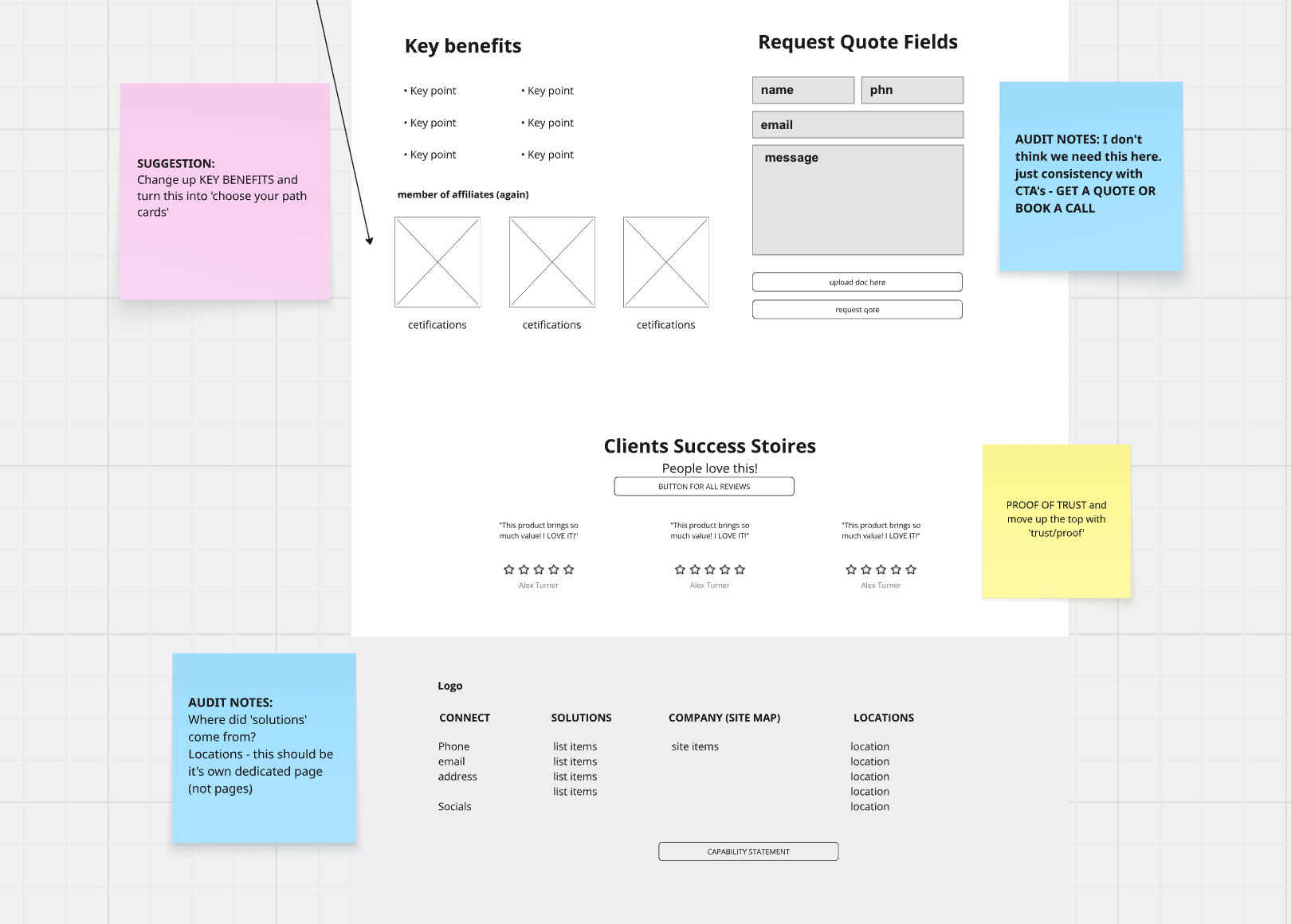
A website wireframe layout with sticky notes highlighting suggestions and notes, including sections for key benefits, request quote fields, client success stories, validation notes, logo, contact information, solutions, company site map, and locations.

Key Findings

  • Users didn't understand the certification process

  • Service terminology created confusion

  • Navigation lacked clear customer pathways

  • Existing content focused on services rather than customer needs

THREE: Information Architecture

I restructured the site around customer intent, defining the purpose of each page, primary calls-to-action and content hierarchy before design commenced.

FOUR: User Flows

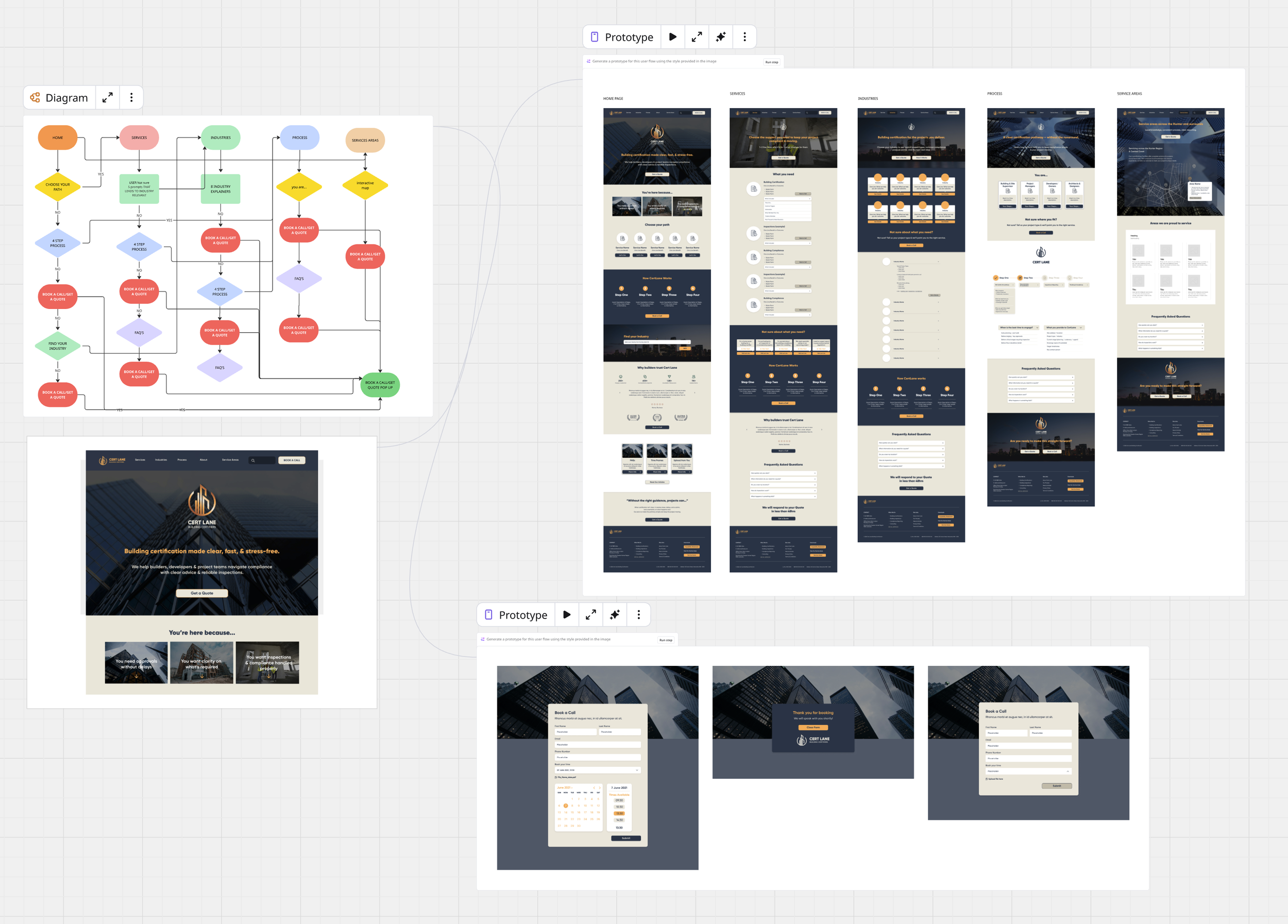
Created simplified pathways designed to reduce friction and guide users towards enquiry actions with confidence.
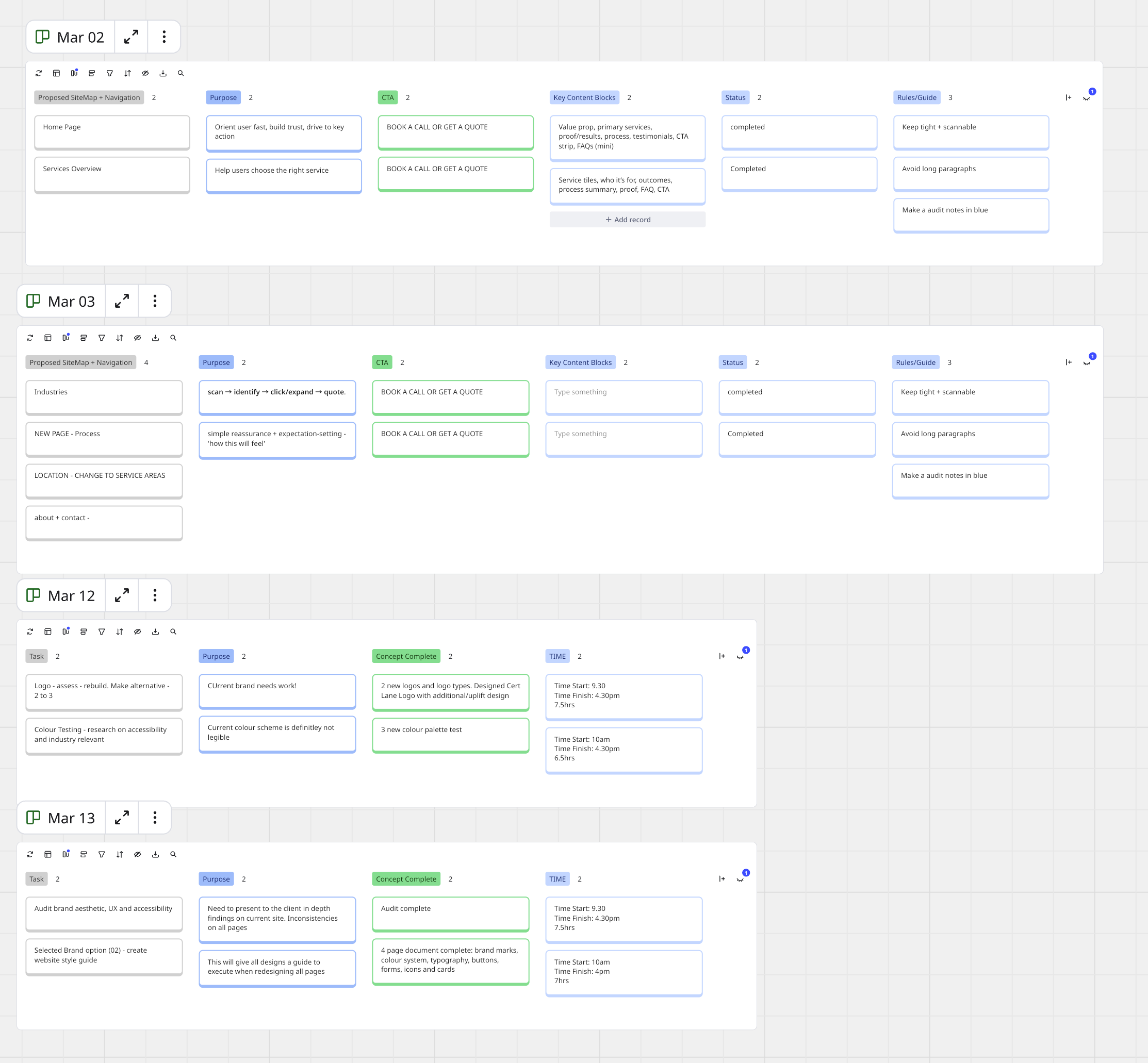
Screenshots of a project management or planning board with multiple rows and columns, containing text tasks, purpose statements, status updates, rules, guidelines, and notes related to branding, design, and website development process.
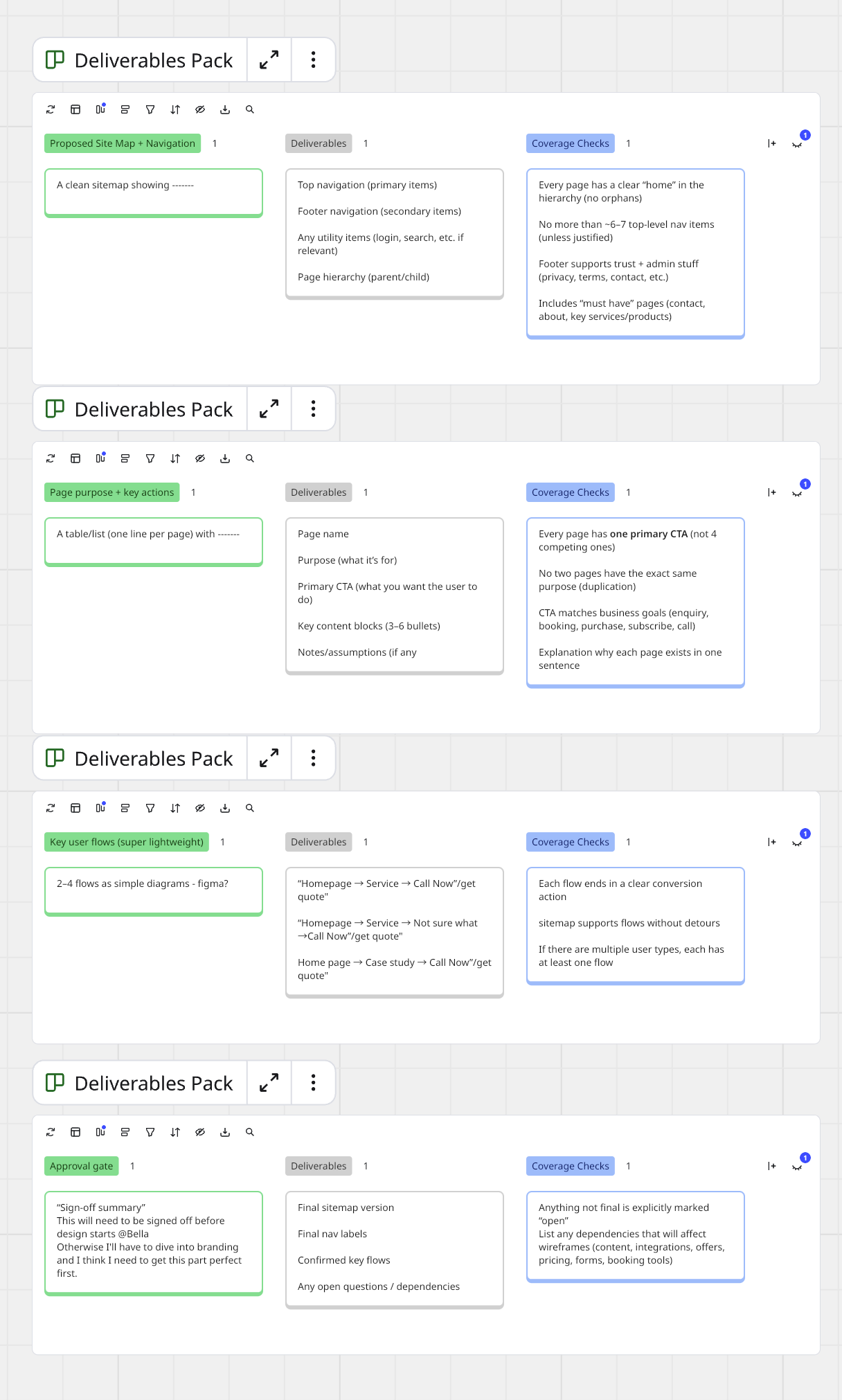
Screenshots of a project management or website planning board showing different sections for sitemap planning, content strategy, flow diagrams, and approval process, with notes and checklists.
Screenshot showing a website prototype for a building certification company, with pages including homepage, services, industries, process, and contact form, all featuring dark and beige color schemes with images of buildings.

FIVE: UX WIREFRAMES

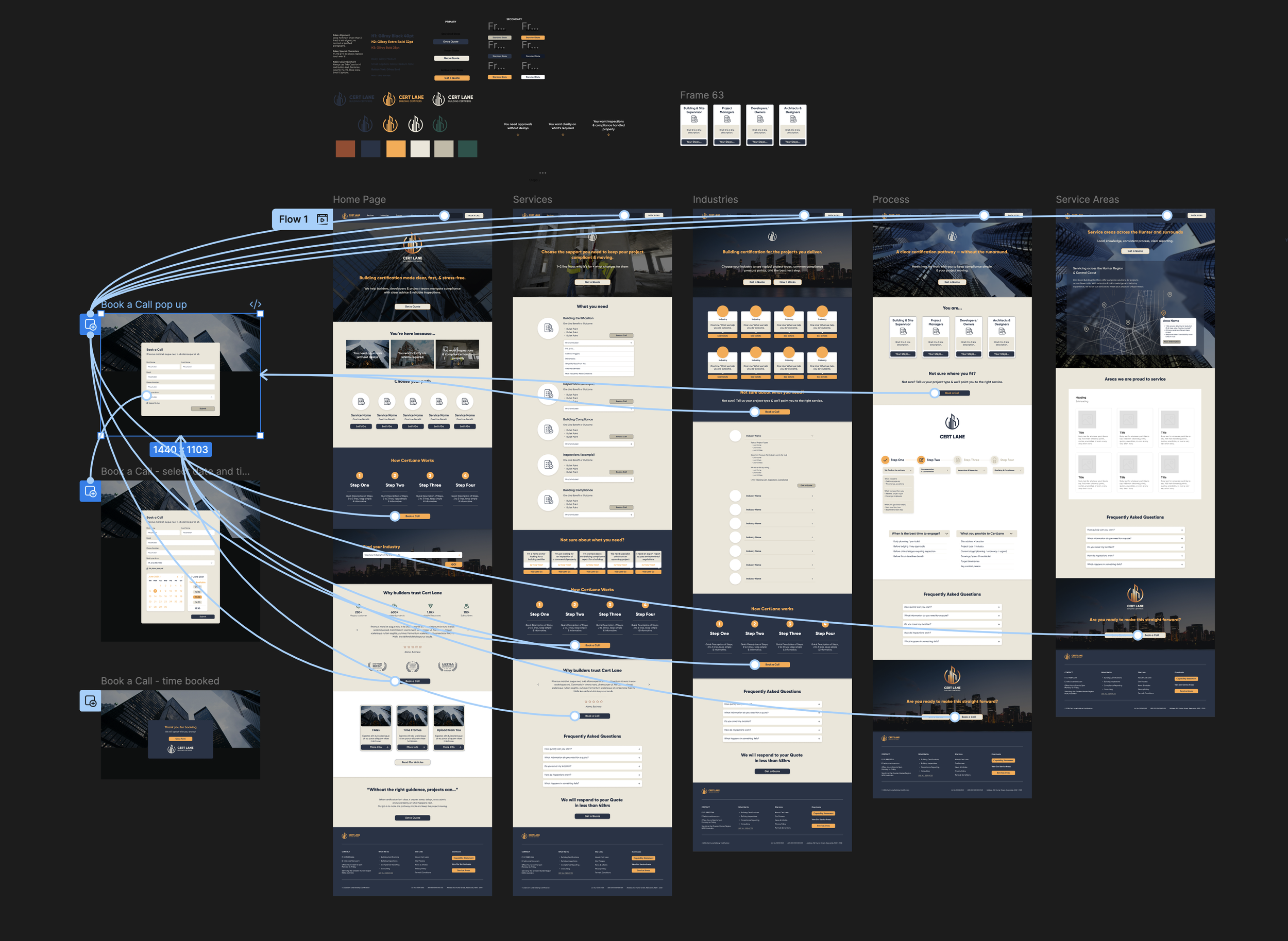
Screenshots of a website wireframe or app design for a construction certification service, showing various pages, flow paths, and UI elements with a cityscape background.

New Process Page introduced

Introduced a dedicated Process page to explain the certification pathway and reduce customer uncertainty.

"Not Sure What You Need?"

Created a routing mechanism for users unfamiliar with certification terminology.

Industry Pathways

Developed industry-specific content pathways to improve relevance and self-selection.

Confusion reduction section

Objection handling section

BRANDING

This is actually my area of expertise. Lets get into it...

CATEGORY 01: DEFINE WHO CERT LANE IS.
For this category, the brand has to communicate:

  • Trust / legitimacy (regulated service)

  • Clarity (less confusion, fewer surprises)

  • Calm competence (stress reduction)

  • Speed + reliability (but not “dodgy fast”)

  • So the design system should feel:
    structured, readable, modern, restrained (not flashy)

CATEGORY 02: BRANDING DELIVERABLES
Keeping aligned to the website project, my aim for Cert Lans is a Brand + UI Uplift, not a full rebrand.

  • UI mini kit

  • Type scale (H1/H2/H3/body)

  • Buttons (primary/secondary)

  • Form fields

  • Cards

  • Icons (style rules)

  • Spacing system (8pt grid)

  • Basic accessibility checks (contrast)

A screenshot of a digital presentation or report about Cert Lane building certifiers. It includes multiple pages with headings, checklist points, branding, and details on audit standards, layout issues, and design considerations.

BRAND REFRESH

Not just logos.

The refreshed identity was developed to communicate professionalism, clarity and trust while improving accessibility and consistency across digital touchpoints.
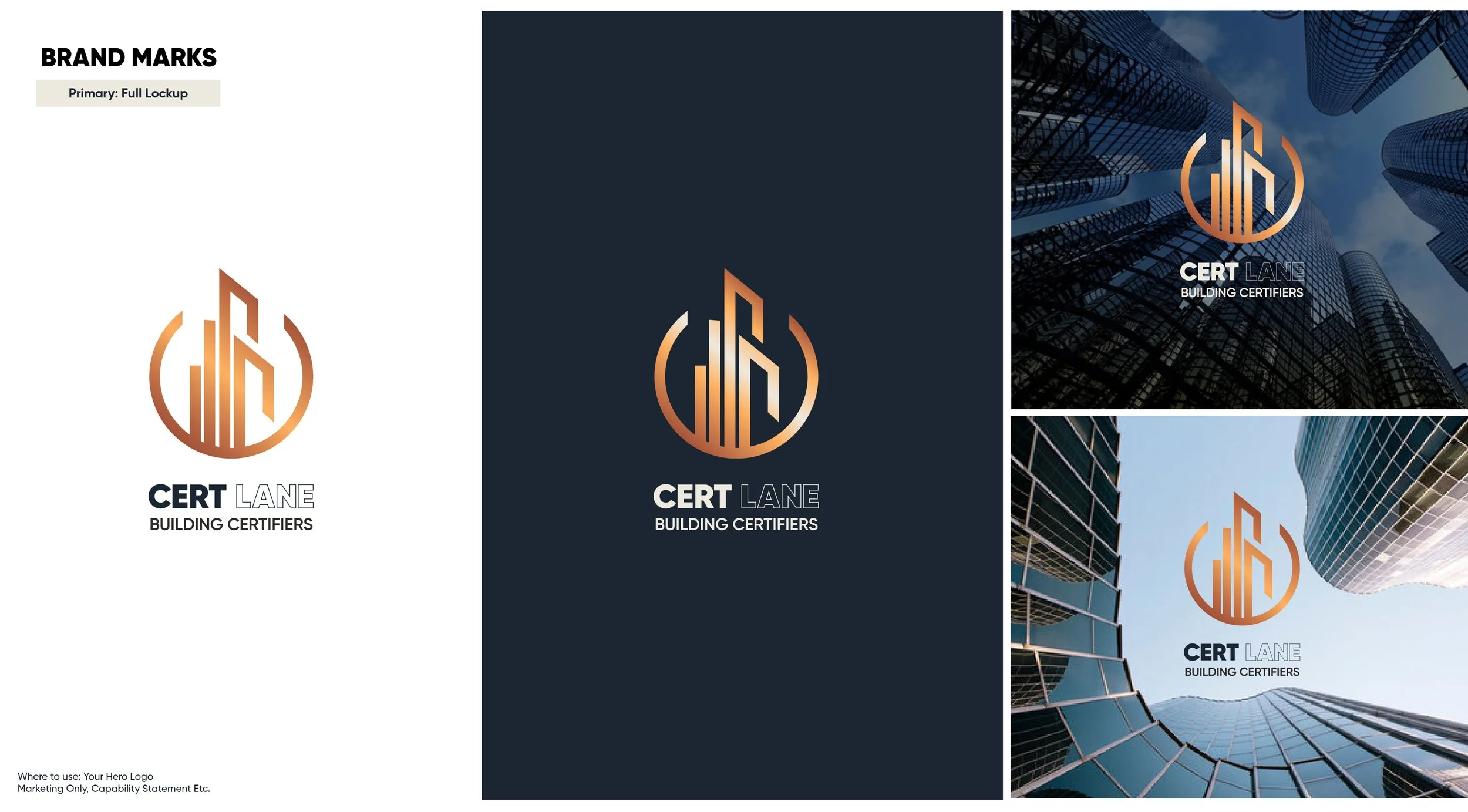
A branding board for CERT Lane Building Certifiers featuring their logo in copper-colored design, with photos of modern skyscrapers and high-rise buildings.
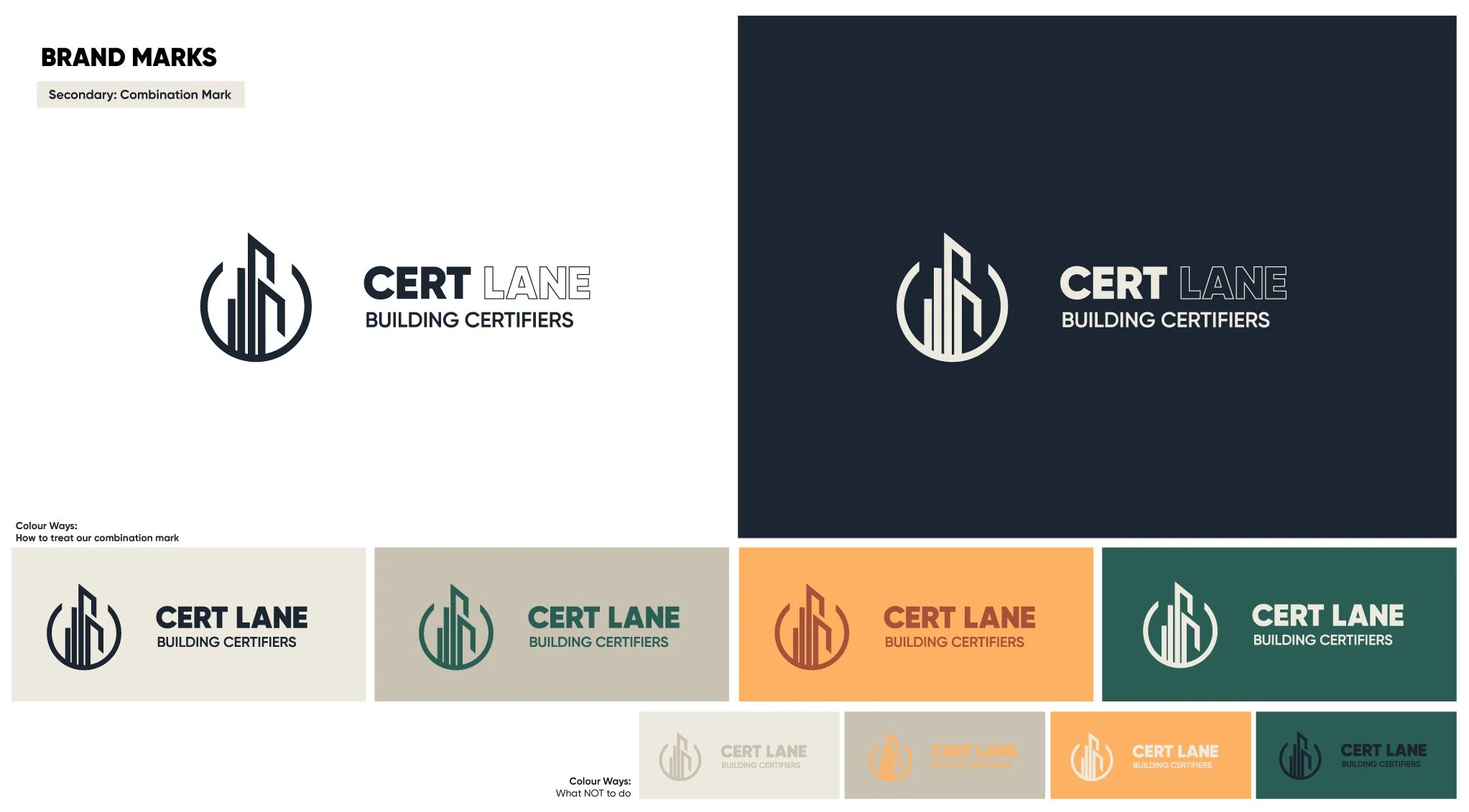
A chart illustrating different color ways for the Cert Lane building certification logo, including options with a primary logo on light and dark backgrounds, and variations in color schemes for branding purposes.
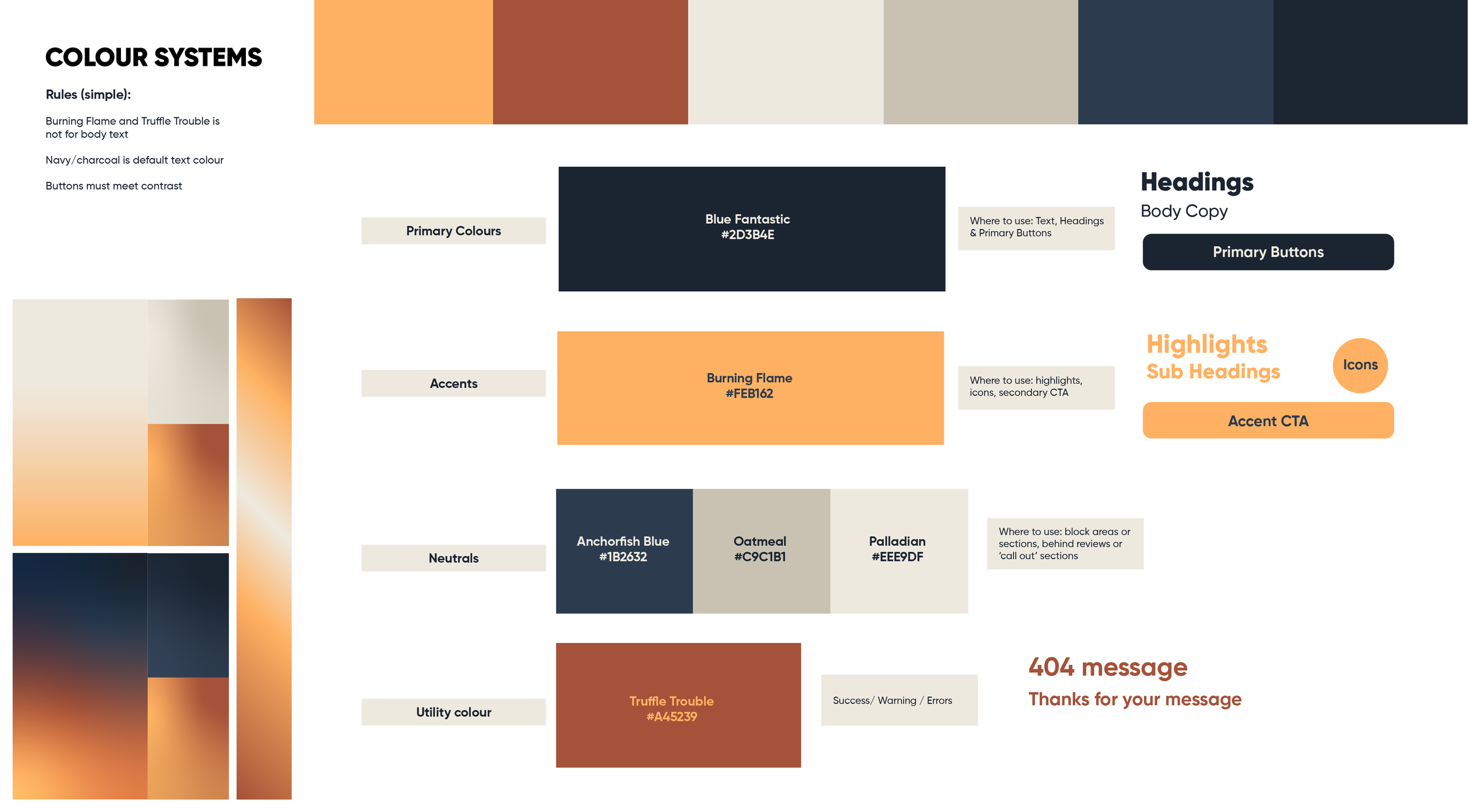
A color system chart with various color swatches and corresponding color code labels. The chart includes sections for primary colors, accents, neutrals, and utility colors, with labels such as Blue Fantastic, Burning Flame, Anchorsh Blue, Oatmeal, Palladian, and Truffle Trouble. The layout has a header titled 'COLOUR SYSTEMS' and guidelines for color usage and contrast.
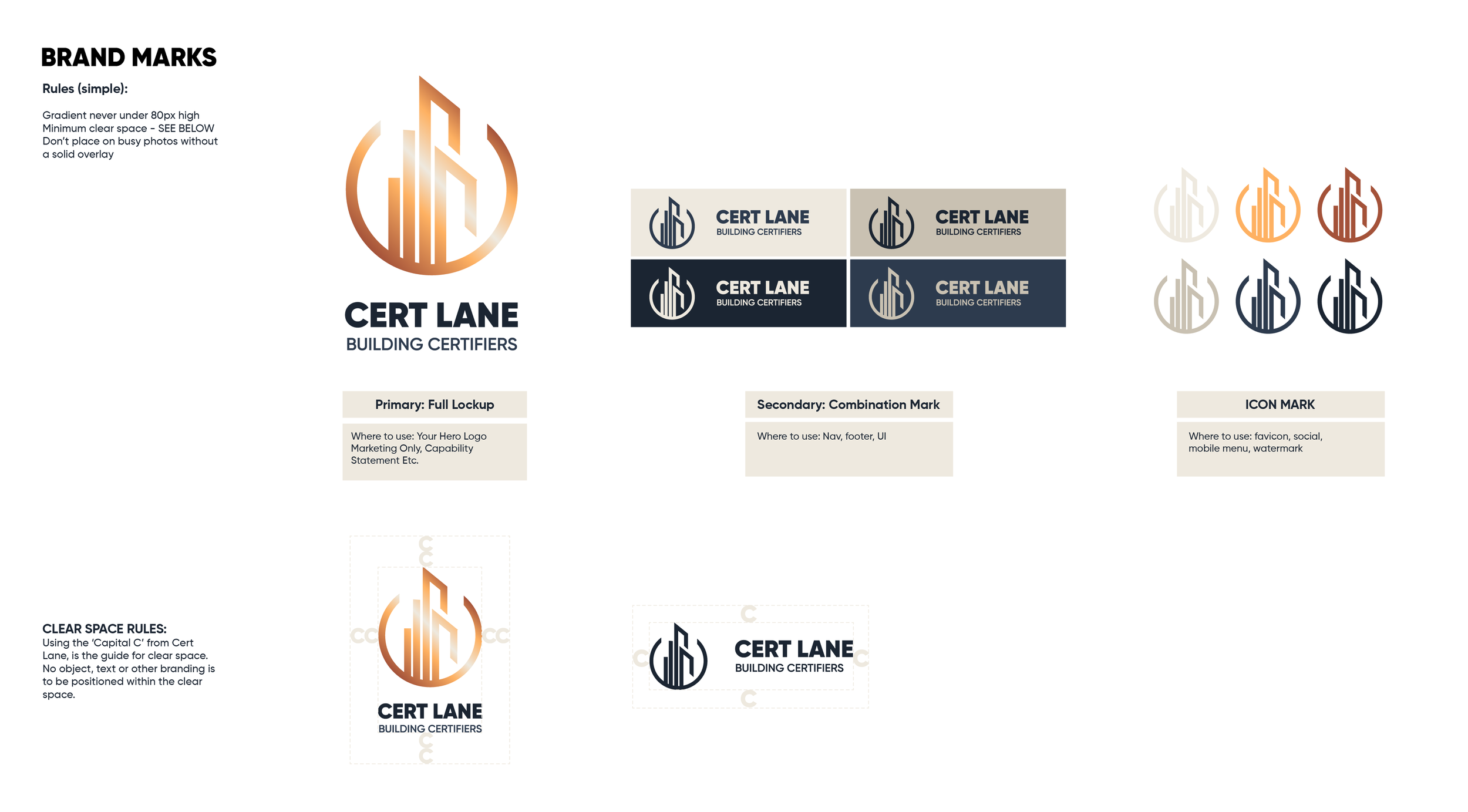
Brand marks guideline with logo variations, color options, and rules for clear space, primary, secondary, and icon mark usage.
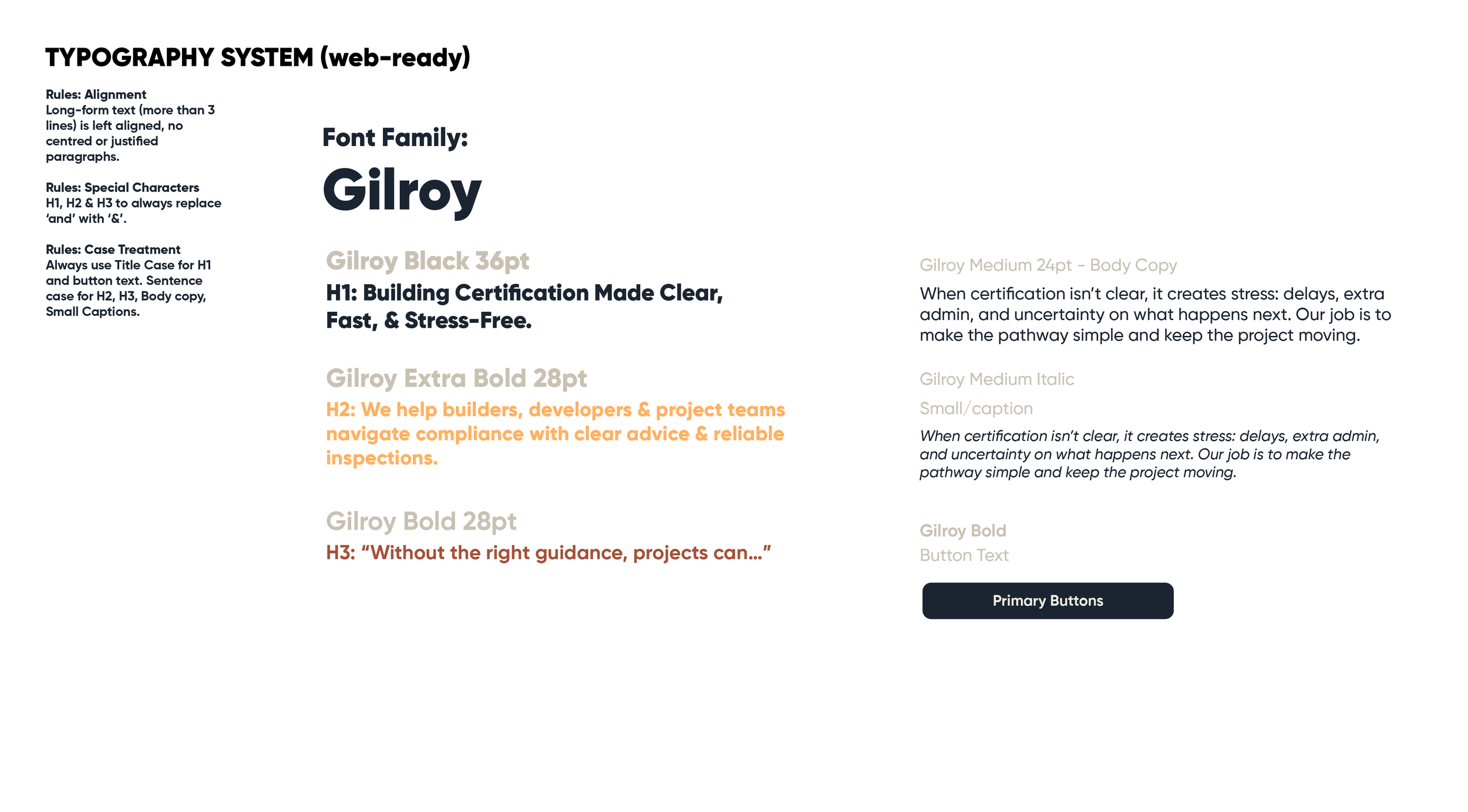
Typography style guide with various font sizes and weights, including explanations of rules for alignment, special characters, case treatment, and sample text.
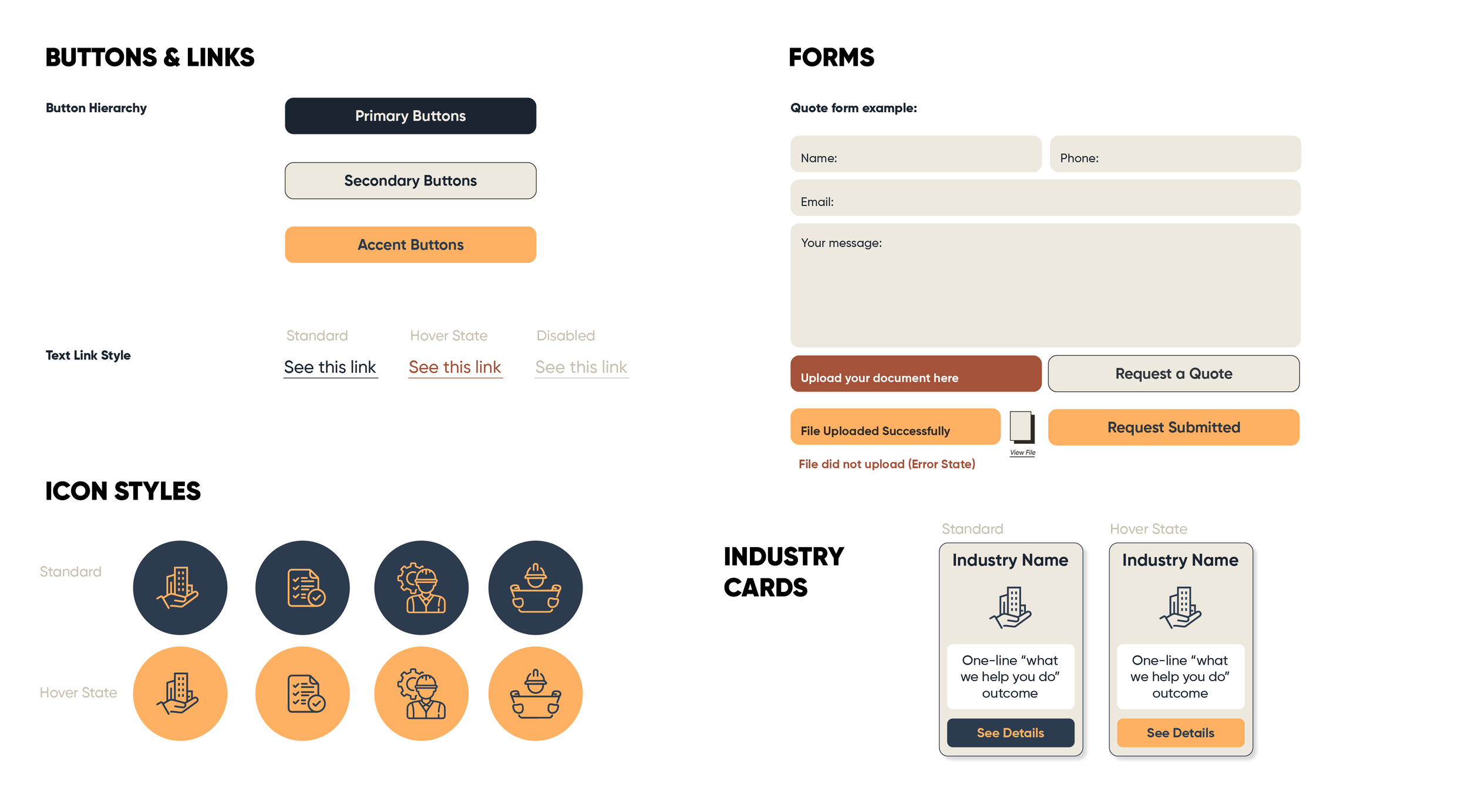
Infographic showing button styles, form designs, icon styles, and industry cards with placeholders for content and labels.
Black and white image of a woman with blonde hair and glasses, wearing a light-colored shirt and necklace, smiling with one hand on her hip against a background with purple and black abstract shapes.